
November 3rd, 2026
Penetrants, water displacers, lubricants and protectants solve four different maintenance problems. Some products can handle more than one role, but that does not make every spray suitable for every component.
The quickest way to choose is to look at the part in front of you and ask what has gone wrong. Is it stuck, wet, wearing or exposed to corrosion?
A seized bolt needs penetration and a damp connector needs moisture displaced. A loaded bearing needs a lubricant that can carry pressure. Bare metal in salt air needs a protective barrier.
Here is how the four categories differ and where each INOX product fits.
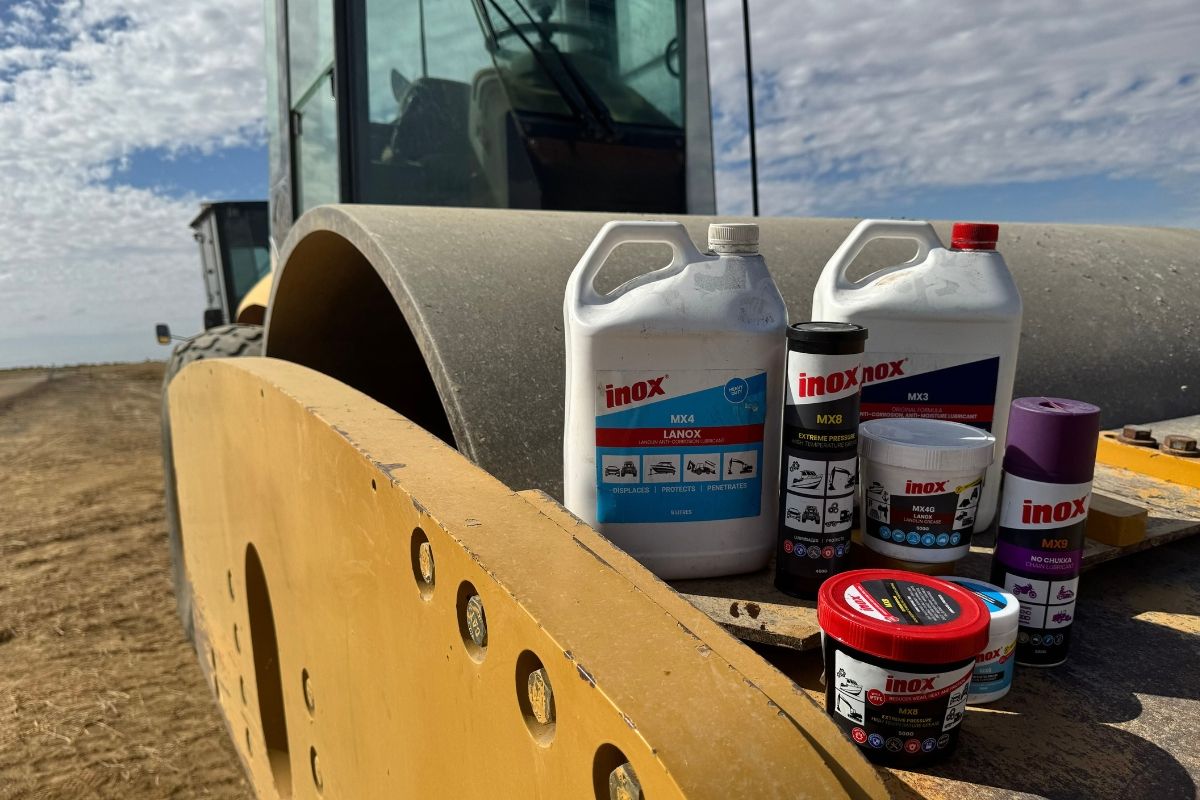
Penetrants: for seized nuts, bolts and pins
A penetrant is a thin, low-viscosity fluid made to creep into the tiny gaps between corroded metal surfaces. It works its way along threads and into the rust bond, helping the parts come apart.
Reach for a penetrant on stuck nuts and bolts, rusted hinge pins, seized shackles, corroded exhaust fasteners and linkages that will not move.
INOX MX3 Lubricant is made with a high-grade white-oil base and rust inhibitors. It is designed to penetrate stuck parts and help free them without causing damage, then leaves a protective lubricating film.
Spray directly where the threads meet and let the product work before adding more force. Allow at least 20 to 30 minutes for a normally seized fastener and leave badly corroded parts overnight, reapplying if required. Giving it time can reduce the chance of rounding a nut or snapping a fastener.
Water displacers: for wet electrics and tools
A water displacer moves moisture off metal and out of tight spaces, then leaves a film that helps guard against further moisture and corrosion. It is useful after rain, washdowns, spray exposure or storage in humid conditions.
Typical applications include battery terminals, plugs, sockets, switches, light fittings, starter motors, wiring connections and hand tools. INOX MX3 Lubricant is non-conductive and is used to help protect switches, plugs, sockets and other electrical components from moisture and corrosion. It can also help start wet motors.
This does not replace electrical safety procedures. Isolate equipment and test that it is de-energised before treatment, let any excess drain and follow the manufacturer’s instructions before restoring power. A water displacer cannot repair damaged insulation, burnt contacts or a failed component.
Lubricants: for moving, loaded surfaces
A lubricant forms a film between moving surfaces to reduce friction and wear. The key question is load. A light spray can quieten a hinge or free a linkage, but it cannot replace the grease specified for a loaded bearing, joint or coupling.
INOX’s workshop guide describes INOX MX3 Lubricant as a light duty multi-purpose lubricant, so treat it as a preparation step.
For wheel bearings, ball joints, trailer couplings and designated grease points, use a product made to stay in place under pressure. INOX MX8 Extreme Pressure Grease is a lithium complex grease with rust and corrosion inhibitors and tackiness additives. It is designed for high-load and shock-load conditions where vibration, temperature changes and water exposure challenge ordinary lubricants.
Where grease is not an option, such as inner cables, tight clearances and precision bushes, INOX MX5 Plus PTFE Lubricant is an extreme pressure (EP) liquid lubricant designed to protect metal-to-metal contact. Its PTFE film reduces friction and wear under heavy load, and its non-tacky formula doesn’t attract dust and grit.
In dusty conditions, grease can trap grit and turn into an abrasive paste. INOX MX12 PTFE Supa Glide is a fast-drying, resin-bonded PTFE dry film lubricant for light to moderate loads. Once cured, it leaves a hard, abrasion-resistant film that resists dirt and dust and does not wash off with water.
Always follow the machine or vehicle manufacturer’s lubricant specification.
Protectants: for exposed metal and storage
A protectant creates a barrier between metal and the moisture, salt and oxygen that drive corrosion. It suits exposed components that move little or spend long periods outdoors or in storage, such as boat trailer chassis, anchors, shackles, fasteners, brackets, farm machinery and seasonal equipment.
LANOX MX4 Lanolin Lubricant is a heavy-duty anti-moisture and anti-corrosion product based on high-grade oil and lanolin. Its lanolin base does not dissolve in water and leaves a protective film, helping extend protection between applications in marine, farming, transport and other high-humidity settings.
Inspect exposed areas regularly and reapply whenever the film has been disturbed, washed away or visibly depleted. Keep LANOX MX4 off rubber fittings and hoses, as it may affect some rubber with extended use.
For rubber and O-ring applications, use INOX MX6 Food Grade Grease. If you are not already using a clay (bentone) based grease, clean the old grease out completely before applying, as mixing different grease types can cause compatibility issues and reduce effectiveness.
Which product should you choose?
Use the problem as your starting point:
- Stuck: use INOX MX3 to penetrate corrosion and help free the component.
- Wet: use INOX MX3 to displace moisture and help protect suitable electrical and metal surfaces.
- Loaded: use INOX MX8 at designated high-load grease points.
- Dusty: use INOX MX12 where a dry, low-friction coating suits better than wet grease.
- Exposed: use LANOX MX4 for longer-lasting external corrosion protection.
For light household and workshop jobs such as hinges, locks, tools and sliding mechanisms, INOX MX3 may penetrate, displace moisture, lightly lubricate and protect in one application. For heavier equipment or demanding environments, use each product for its designed strength.
INOX’s workshop sequence sums it up: INOX MX3 frees the part, LANOX MX4 protects exposed surfaces, INOX MX8 carries the load at designed grease points and INOX MX12 keeps light-load sliding surfaces moving without collecting grit.
Browse the full INOX range or find a stockist near you.