
November 3rd, 2026
Lanolin, oil-based and silicone lubricants each suit different materials and jobs, and the wrong choice can leave metal unprotected or damage rubber seals. As a rule of thumb, lanolin suits exposed metal that needs lasting corrosion protection, petroleum (mineral oil) suits everyday metal maintenance and freeing stuck parts, and silicone or a rubber-safe grease suits seals and plastic runners. Australia’s salt air, tropical humidity and machinery parked up between seasons all shape that choice.
The categories overlap, too. Lanolin is a natural wax from sheep’s wool, but LANOX MX4 Lanolin Lubricant combines it with a high-grade oil, so a lanolin product isn’t automatically free from oil.
Lanolin lubricants: for exposed metal near salt water
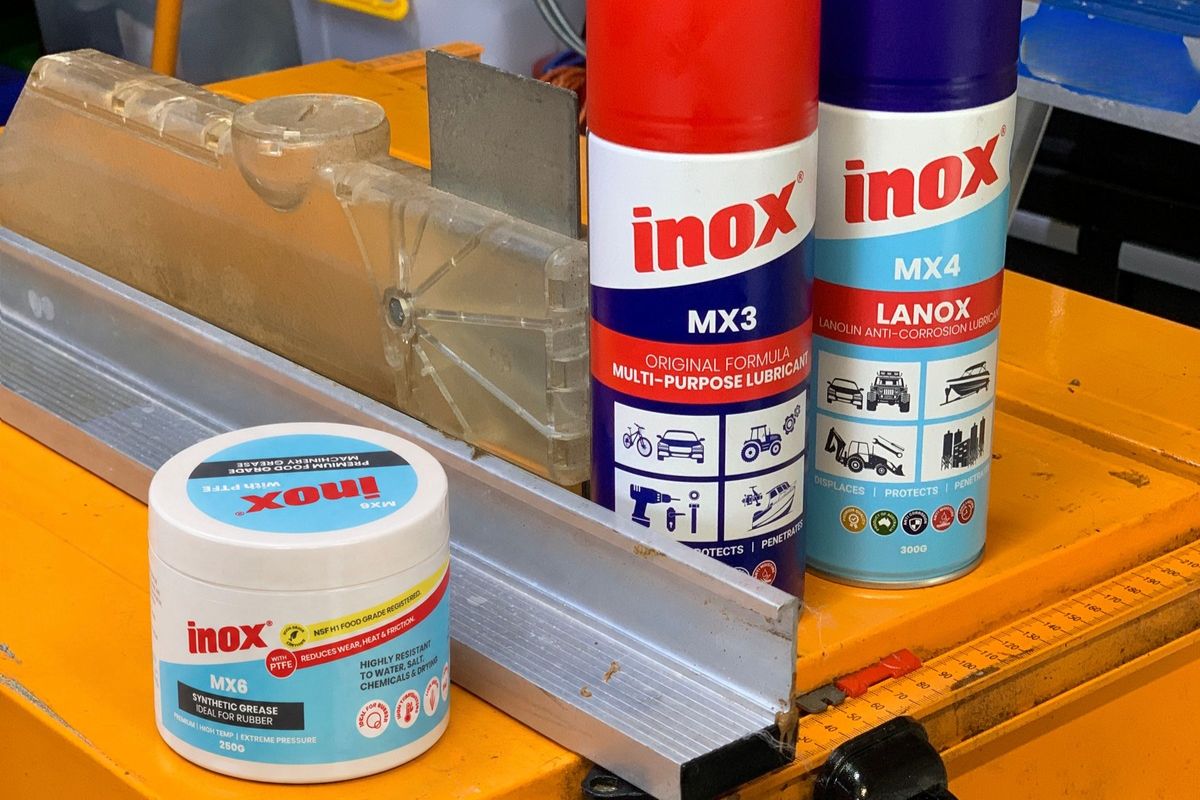
Lanolin is the choice when exposed metal needs protection that lasts between applications. LANOX MX4 Lanolin Lubricant has a lanolin base that doesn’t dissolve in water, so its film resists washing off in rain and spray, and it’s formulated to stop electrolysis between dissimilar metals.
Use it on boat trailer chassis and spring eyes, winches, anchors and shackles, outboard power legs and farm machinery stored over the off-season. Keep it off outboard rubber fittings and hoses, which need a rubber-safe grease.
Oil-based lubricants: for everyday metal maintenance
A quality mineral-oil lubricant suits general metal maintenance, freeing seized parts and day-to-day corrosion protection. INOX MX3 Lubricant uses a high-grade white oil with rust inhibitors to displace moisture, penetrate rusted nuts and bolts, and keep hinges, locks, sliding doors and power tools running smoothly.
Unlike solvent sprays that evaporate quickly, its oil base lasts without gumming up, and its lighter film suits electrical gear and fishing reels. INOX MX3 is a white oil formulation with no kerosene, silicon or acid, and our guide to INOX MX3 vs LANOX MX4 compares the two.
Silicone and rubber-safe options: for seals and plastic runners
Silicone suits rubber seals, plastic runners and sliding parts where sticking is the problem, such as car door and window rubbers. Keep it away from anything you plan to paint, because even minute traces can cause craters in fresh paint. That’s one reason INOX MX3 Lubricant and LANOX MX4 Lanolin Lubricant contain no silicon.
INOX covers those jobs without silicone. For O-rings and rubber seals, INOX MX6 Food Grade Grease is a fully synthetic grease that is safe on rubber, neoprene and synthetic O-rings and seals. If you are not already using a clay (bentone) based grease, clean the old grease out completely before applying, as mixing different grease types can cause compatibility issues and reduce effectiveness.
For sliding parts where a wet lubricant isn’t suitable. INOX MX12 PTFE Supa Glide leaves a dry, hard and slippery PTFE film.
Rubber and food equipment: what to check
INOX MX3 Lubricant and LANOX MX4 are not intended for direct application to rubber seals, and long-term or repeated soaking may soften natural or porous rubber. Wipe off any overspray and use INOX MX6 Food Grade Grease for rubber and O-ring work.
For food equipment, look for NSF H1 registration, which covers incidental food contact. INOX MX3FG Food Grade Lubricant and INOX MX6 Food Grade Grease both hold it.
The two cans worth keeping on hand
For most Australian homes and workshops, INOX MX3 Lubricant for everyday metal jobs and LANOX MX4 Lanolin Lubricant for anything near salt water cover most routine maintenance. Browse the full INOX range or find a stockist near you.