
August 4th, 2026
Australia has some of the best personal watercraft riding in the world, and the good news is that most of it isn’t in the capital cities. The best combination of scenery, ride variety and decent launch infrastructure tends to be found just outside the major centres, from the Gold Coast Broadwater to the Gippsland Lakes to Darwin Harbour.
Whether you’re loading up the trailer for a weekend at the coast or planning your first big personal watercraft (PWC) trip, here’s a state-by-state look at where to go, plus the practical stuff (rules, gear, and looking after your ski) that makes the difference between a great day out and an expensive one.
Queensland: the Gold Coast Broadwater and beyond
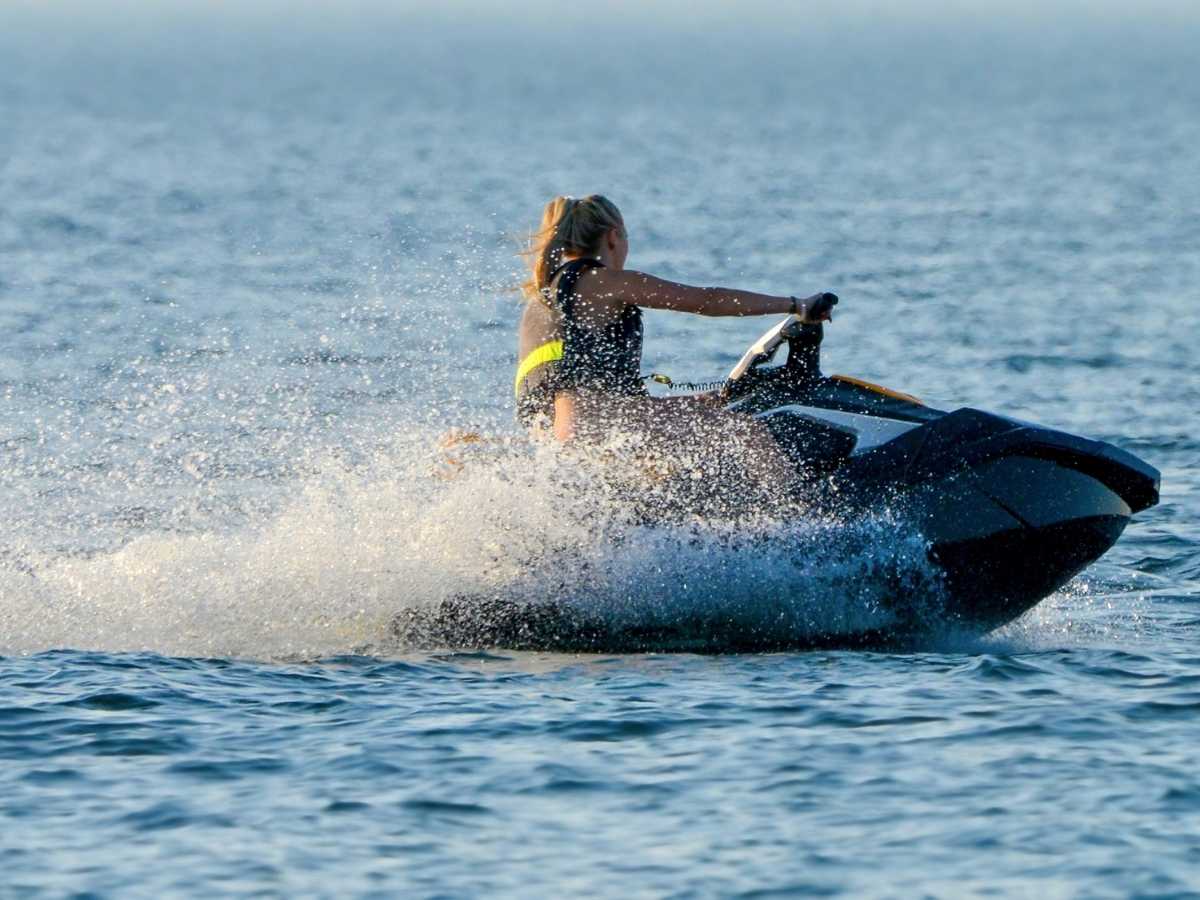
Queensland’s standout is the Gold Coast Broadwater and South Stradbroke Island. With more than 260 km of navigable waterways and direct Pacific access through the Seaway, it’s a genuine playground. Launch at The Spit, Runaway Bay, Paradise Point, Jacobs Well or Coomera, then ride the Broadwater north past Wave Break Island and along South Stradbroke to Tipplers Passage and Couran Cove. Calm mornings and high tide make the shallow banks easier to manage.
Further north, the Sunshine Coast offers three distinct rides: Pumicestone Passage beside Bribie Island (a protected, roughly 34 km run), the Maroochy River with its mangrove-lined channels, and the Noosa River, where experienced riders sometimes push out past the bar toward Little Cove and Hell’s Gates.
Moreton Bay and Tangalooma round out the southeast, with island scenery near Brisbane, though the Tangalooma crossing needs a proper weather window and fuel margin, and marine-park go-slow zones protect turtles and dugongs.
Queensland requires both a recreational marine driver licence and a PWC licence to operate privately, with a minimum age of 16. All PWCs must be registered, and speed limits generally cap at 6 knots within 60 metres of people, vessels or structures.
New South Wales: Port Stephens and Lake Macquarie lead the way
Port Stephens is the pick of the NSW coast: a large, sheltered bluewater bay with 18 ramps and a strong marina scene. Soldiers Point is the best-protected public launch, and from there you can ride to Nelson Bay, Shoal Bay, across to Jimmys Beach, or up the Myall River at touring pace.
Lake Macquarie is arguably the best all-day protected PWC environment in the state. At 120 square kilometres with around 30 public ramps, the islands and beaches around Pelican and Marks Point are made for exactly this kind of riding.
One thing to flag if you’re a Sydney-based rider: PWCs are prohibited throughout Port Jackson (Sydney Harbour), so if that’s your home patch, head to the Hawkesbury River and Broken Bay instead, where sandstone escarpments and island-hopping make for a great river safari, provided you ride in a straight line rather than circling within 200 metres of shore.
NSW requires a PWC licence for all riders (an upgrade from a general boat licence), with under-16s capped at 20 knots and restricted from night operation or towing.
Victoria: Mornington Peninsula and the Gippsland Lakes
The Mornington Peninsula is Melbourne’s best coastal base, with ramps at Mornington, Safety Beach, Rye and Sorrento feeding rides along the bay coast or into the more sheltered Western Port from Hastings. Just be aware that from Martha Point to Point Nepean, the 5-knot shore zone extends out to 500 metres, so you’ll need to use marked channels before opening the throttle.
For something completely different, the Gippsland Lakes offer Victoria’s best multi-day touring network. Lakes King, Victoria and Wellington link up Lakes Entrance, Metung, Paynesville and Raymond Island into a genuine water road trip.
Victoria requires a marine licence with PWC endorsement, available from age 16, and all powered recreational vessels must be registered.
South Australia: the River Murray and Fleurieu Peninsula
The River Murray and Riverland is SA’s strongest recommendation, an established high-speed watersports environment around Renmark, Berri, Loxton and Mannum. Just watch the backwater 4-knot zones and be alert to houseboats, ferry cables and blind bends.
For a coastal option, the Fleurieu Peninsula around Encounter Bay and Victor Harbor gives Adelaide riders dramatic coastline, while Goolwa and Lake Alexandrina offer more sheltered inland-estuary riding.
SA riders need a boat operator’s licence and must be at least 16 to operate a PWC. Operating hours are also restricted, generally from 8 am to sunset (or 8 pm), and there’s a 300 metre separation rule around marine mammals worth remembering near Encounter Bay.
Western Australia: Rockingham and Mandurah
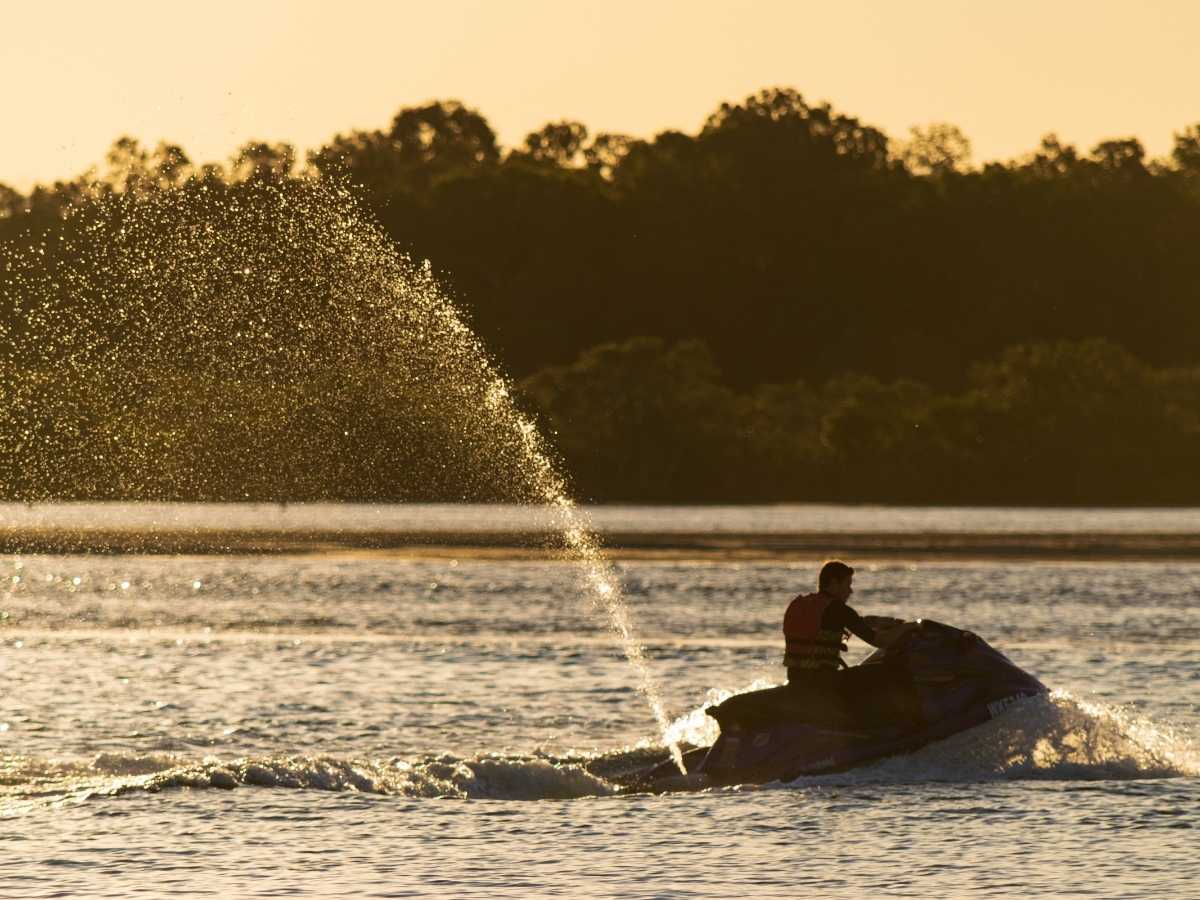
Rockingham and Cockburn Sound are the pick of the Perth region, with more sheltered water than the central coast and guided tours exploring Cockburn Sound and Garden Island. Mandurah and the Peel-Harvey estuary are equally strong, with 134 square kilometres of sheltered water, canals and dolphins, connected to the ocean via the Dawesville Channel.
For the more adventurous, the Rottnest Island crossing from Fremantle is a marquee ride, but treat it as a genuine offshore voyage requiring careful planning rather than a casual day trip.
WA requires a Recreational Skipper’s Ticket, with a minimum age of 14 (with restrictions for 14 to 15 year olds).
Tasmania and the Northern Territory
Tasmania’s Freycinet, Coles Bay and Schouten Passage offer world-class granite and white sand scenery for capable riders prepared for cold water and exposure. St Helens and Georges Bay provide a more sheltered alternative.
In the Territory, Darwin Harbour has an established guided PWC scene, tropical scenery, and WWII wreck sites, while Bynoe Harbour and Dundee Beach suit experienced, self-sufficient local riders. Crocodile awareness is essential in any Top End waterway, and large tides demand careful planning.
Before you launch: the essentials
A few things apply no matter which state you’re riding in:
- Check local zoning and signage. Rules change by council and marine park, so confirm ramp signage, boating maps and current Notices to Mariners before you launch.
- Treat island crossings as voyages. Tangalooma, Rottnest and Schouten Passage all need a genuine weather window, fuel reserve and proper safety gear, not just a fast ski.
- Match your gear to the water. Lifejacket requirements, EPIRBs, flares and radios all scale with distance offshore and vary state to state.
- Protect your ski as well as yourself. Saltwater is brutal on outboards, trailers, electrics and fittings, and a bit of post-ride care goes a long way toward keeping your PWC running properly for the next trip.
Looking after your jet ski once you’re off the water
Every one of the destinations above shares one thing in common: saltwater, spray and moisture that will happily corrode anything metal or electrical if you let them. A quick maintenance routine after each ride keeps your ski, trailer and towbar in proper working order.
Engine, fittings and electrics: After washing down with fresh water, spray LANOX MX4 Lanolin Lubricant over the motor, power leg, cables and linkages. The lanolin barrier displaces moisture and protects against ongoing corrosion, and it’s also the right product for light fittings, wiring and switches on the ski and trailer. One thing worth knowing: MX4 can affect some rubber seals with prolonged use, so keep it off rubber components and hoses where possible.
Steering cables and control cables: INOX MX8 Extreme Pressure Grease is the better option for steering cables, gearbox control cables and any grease points, since it’s water washout resistant and holds up under load.
Rubber seals and O-rings: For anything rubber, including seals and O-rings, use INOX MX6 Food Grade Grease instead of a lanolin-based product.
Trailer and towbar: Melt LANOX MX4 grease and paint it onto the trailer chassis, axles and springs for long-term corrosion protection, and pack the wheel bearings with INOX MX8 Extreme Pressure Grease. On the towball itself, INOX MX8 grease handles the load and keeps things moving freely.
Battery: If your ski sits idle between rides or over winter, add INOX MX2 Battery Conditioner to the battery. It helps prevent the sulphation that causes most lead-acid battery failures, which matters if your PWC spends more time in storage than on the water.
Get that routine sorted and the biggest threat to your jet ski won’t be the ocean, it’ll just be the wait for the weekend to roll around again.