
August 4th, 2026
A lot of what slows an install down or turns a simple job into a frustrating one is all about the small stuff: a bolt that won’t sit right, a drill bit that’s chewing out instead of cutting clean, a connector that’s fiddly to seat properly. Most of it comes down to how you treat the hardware before and during assembly, and it’s worth sorting on the spot rather than living with it.

Here’s how to work through a solar, battery or EV charger install job by job, covering what actually helps at each stage to keep things faster, cleaner and less hassle. There’s a second payoff too, since the same prep that saves you time on site is what keeps corrosion and seizing from becoming a warranty claim once the weather gets to work on the system. Get it right at install and there’s less coming back for you and less grief for the customer, which is worth mentioning when you talk them through what they’re paying for.
Racking, Mounting and Structural Hardware
Every rail-to-bracket junction, roof-penetration screw and threaded fastener in the racking system is a spot where aluminium, galvanised steel and stainless are all touching. Pack INOX MX4G LANOX Lanolin Grease into those threads and contact faces before assembly, it’s a five-second dab per fastener while you’re already handling it, not an extra step, and it stops the fastener galling or seizing over time. For broader contact areas like rail-to-bracket faces, a quick spray of INOX MX3 Lubricant or LANOX MX4 covers more ground with less mucking about.
If you’re drilling or tapping new anchor holes into steel purlins, rafters or racking channel on site, INOX MX10 Foaming Cutting Oil makes the cut itself easier. It’s non-conductive so there’s no second-guessing using it near electrical work, and the foam clings to the bit instead of running off, which is exactly what you want drilling upward into a rafter without oil dripping back on you and won’t leave stains or marks behind.
Bonus for the customer: when someone needs to get back in for a panel swap or an inspection in five years, it’s a normal job instead of a fight with a rounded-off bolt head, and seized or corroded fasteners are exactly the kind of thing that turns a simple warranty callback into a much bigger job.
Electrical Terminals, Isolators and Switches
Getting a clean, corrosion-free connection at commissioning means less fiddling with isolator switch contacts, DC and AC isolator terminals and plug or socket connections while you’re wiring up. MX3 is the standard here, rated safe for electrical and electronics work, and it’s anti-static so it doesn’t sit there attracting dust on exposed terminal boxes while you’re still working on the rest of the install. For coastal or high-humidity sites, LANOX MX4 gives a heavier film that holds up better in that environment from day one.
Bonus for the customer: the same reapplication is a genuinely quick job at every service visit, since you’re already isolating and opening the unit anyway for inspection, earth checks or an RCD test. A quick respray while it’s open keeps oxidation from ever getting a foothold, and a terminal that never corrodes is one less fault to trace back to a warranty claim.
Battery Terminals and Connections
Terminal lugs and connections go together cleaner when they’re treated with MX3 or LANOX MX4 at assembly, the same principle used on marine battery terminals to keep the crimp or bolt interface protected from day one. It’s a lot less hassle than coming back to clean corrosion off a neglected terminal down the track.
Bonus for the customer: a terminal that’s protected from the outset rarely needs anything more than a quick visual check and a light respray at a service visit, rather than a proper clean-back, and a corroded battery connection is a common enough fault call that heading it off at install saves everyone the hassle later.
EV Charger Housing, Cable and Connector Care
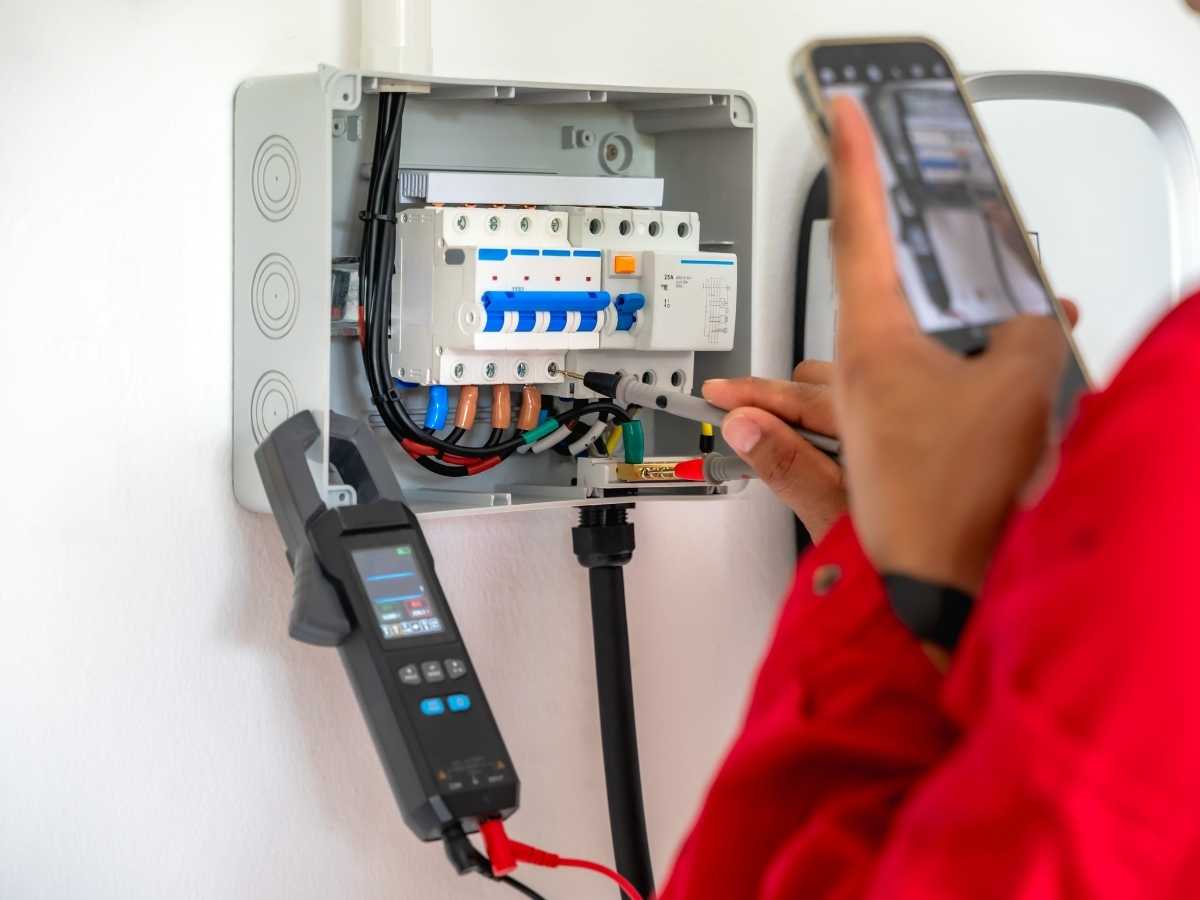
INOX MX10 makes drilling conduit entries into the charger’s wall-mount post or enclosure straightforward, since it’s non-conductive and there’s no risk working near the electrics inside. At commissioning, INOX MX3 on internal terminal connections and earth points is standard practice, and a light film of INOX MX3 or LANOX MX4 on the connector pins themselves adds a layer of moisture displacement and corrosion protection on top of the protective caps you’d already be fitting.
The exterior housing and screen are a separate job, a soft cloth and mild detergent, never a pressure washer, with the unit isolated and cable disconnected first. Useful to know either way, since it keeps you from reaching for anything too aggressive on the housing while you’re on site.
Bonus for the customer: since you’re already isolating and opening the unit for routine inspection, checking and refreshing INOX MX3 or LANOX MX4 on internal terminals and earth screws in the same visit is barely any extra time, and it’s the kind of detail that customers notice when you mention it.
Moving and Mechanical Parts
If you’re putting in a solar tracker, INOX MX8 Extreme Pressure Grease goes into the heavy load points, pivot bearings and gear drives cleanly at build, and INOX MX9 ‘No Chukka’ Chain Lube is built with a tackifier so it stays put on chain-driven mechanisms instead of flinging off mid-application in outdoor, dusty conditions, which means less mess while you’re commissioning the system. Getting the lubrication right at this stage also means the mechanism runs smoother from the first cycle rather than needing a break-in period.
For lighter sliding parts, tilt-frame adjusters, cabinet access doors, latch mechanisms, INOX MX12 PTFE Supa Glide gives a dry, low-tack film that doesn’t attract dust the way a wet oil film does, so moving parts keep moving freely rather than gumming up with grit. On high-cycle points like cable reel mechanisms, INOX MX5 Plus PTFE Lubricant is the pick.
A quick spray of INOX MX3 on hinges and padlocks on inverter or charger cabinets means they open smoothly every time you’re on site, instead of fighting a stiff hinge before you’ve even started the job.
Bonus for the customer: trackers and moving parts lubricated properly at build need less intervention at every service visit, and hold up better under the outdoor conditions they’re stuck running in year-round, so a seized pivot or a dry chain doesn’t turn into a callback within the warranty period.
Cleaning and Surface Prep Before You Protect
Any protective product goes on better, and stays on better, over a clean surface. A quick pass with INOX MX11 Chain & Brake Cleaner on racking hardware, tools or fittings before applying INOX MX3 or LANOX MX4 strips old grime back to bare metal, so you’re not wasting product trying to get it to bond over muck.
Worth knowing: this is for metal hardware, not the solar panel glass itself. There’s no INOX product designed for coating panel glass, so keeping panels clear of dirt and leaf litter is a straightforward washing job rather than something you’d reach for a lubricant to fix.
A Simple Sequence to Build Into Every Job
None of this needs to slow an install down if it’s part of the routine rather than an afterthought:
On the tools before you start: MX11 to degrease anything greasy or contaminated, so nothing you apply afterward is fighting old grime.
During assembly: LANOX MX4 or INOX MX4G on racking fasteners and dissimilar-metal junctions, MX3 on electrical terminals and isolator contacts, INOX MX10 for any drilling or tapping near electrical work, and grease on moving parts (INOX MX8, INOX MX9 or INOX MX12 depending on what’s moving).
At every service visit after: since you’re already isolating and opening things up for standard checks, use that window to refresh INOX MX3 or LANOX MX4 on terminals showing early oxidation and top up grease on anything moving.
Do it this way and the install itself goes faster, with fewer stuck bolts, cleaner cuts and better-seated connections. And because the system’s been protected from day one, it’s also the kind of job that’s still easy to service in five years, with fewer corrosion or seizing faults turning into a warranty callback for you or a headache for the customer, which is worth mentioning to the customer as part of what they’re paying for.