
July 14th, 2026
A combine almost never dies all at once. It dies slowly, then suddenly. A bearing runs dry for a week, a chain stretches a bit further every day, a seal lets go quietly back in autumn – and then one afternoon, with rain on the forecast and half the paddock still standing, the whole thing stops.
Nearly all of it comes back to lubrication. The upside is that lubrication is the one part of this you have full control over. So here are the five spots that catch operators out most, and what to do about each one.
1. Feeder House & Elevator Chains
This is where the machine works hardest. The feeder house drags the full crop load up into the threshing system, and the elevator chains run flat out all day – which is exactly why they’re the first thing people forget to look after.
Let them run dry and they start stretching, jumping sprockets and chewing through teeth. Out here it’s worse, because chaff and grain dust mix with old lube into a gritty paste that grinds everything down faster. A snapped chain in the middle of a good run is half a day gone, easy. And a quick squirt of whatever’s in the shed won’t cut it – the lube has to actually crawl into the rollers and stay there at speed.
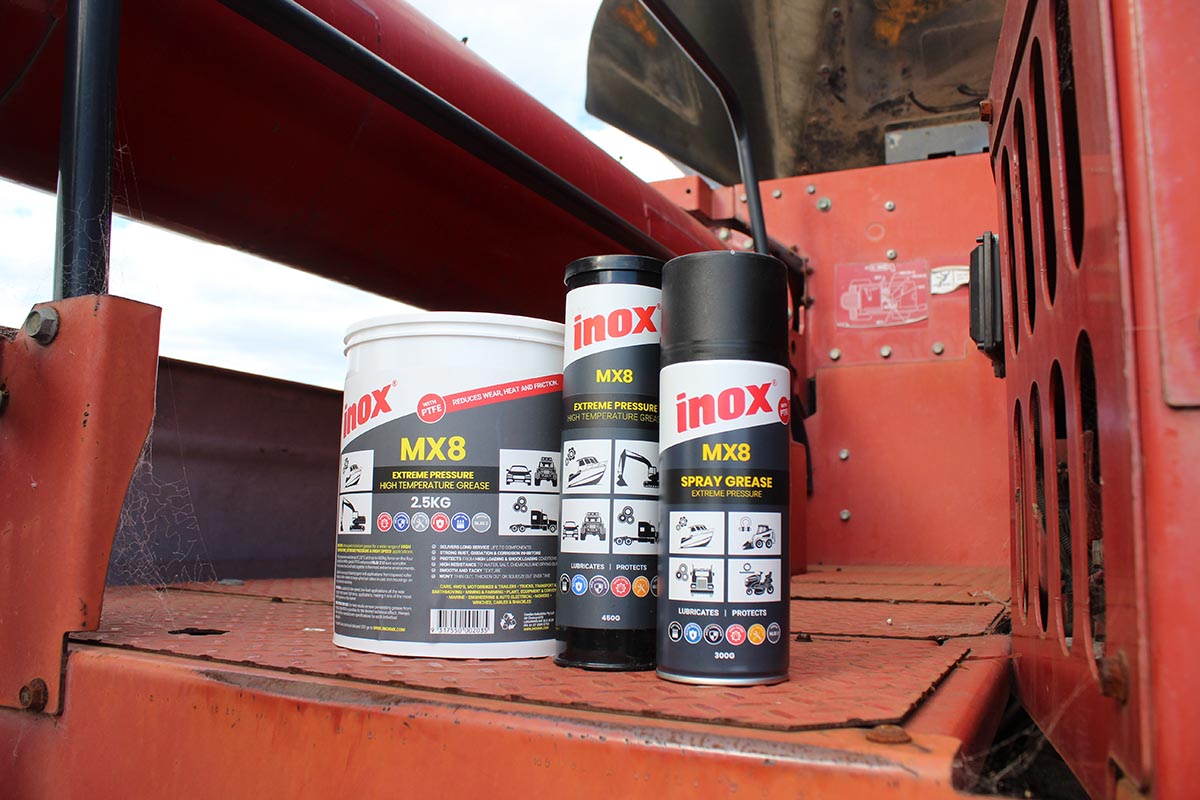
That’s the whole point of INOX MX9 ‘No Chukka’ Chain Lube. The PTFE and tackifier blend grips the chain and stays put instead of flinging off all over the machine, and it’s been proven on harvester chains and header drives in the dustiest, dirtiest conditions going. While you’re there, hit the feeder house drum and drive sprocket bearings with INOX MX8 Extreme Pressure Grease, and keep an eye on them every 10 to 20 hours.
2. Bearings – The Quiet Ones That Bite
There are hundreds of bearings on a combine, and you only need one critical one to seize to bring the lot to a stop. The ones to watch are the high-speed, high-load points: the threshing cylinder, the straw walker cranks, the cleaning fan, the header reel shaft.
Dirt is the real enemy here. Dust and chaff are forever working their way past the seals, and once they’re in, they turn good grease into grinding paste. But here’s the catch a lot of blokes miss – too much grease is just as bad as too little. Pump in more than the bearing can hold and you blow the seal, push the temperature up and suck in more muck, which is the exact thing you were trying to stop. Two or three pumps, run it briefly to spread it, done.
And trust your ears and your hand. A bit of rumble, a housing that’s hotter than the ones either side of it, or grease weeping out of a seal – that’s a bearing telling you it’s got hours left, not days. INOX MX8 Extreme Pressure Grease is what you want in there: it holds its film under shock loading where cheaper greases just squeeze out, and it shrugs off water and dust across grain, fruit, vegetable and cane gear.
View this post on Instagram
3. Gearboxes & Final Drives
When a gearbox lets go, it’s the most expensive day you’ll have all season. And it almost always starts the same boring way – a slow seal leak nobody clocks until the box is running hot and whining. By then the damage is done. Final drives cop it worst, taking a hammering over rough ground, and run them low on oil and you get pitting, scoring and eventually a very bad noise.
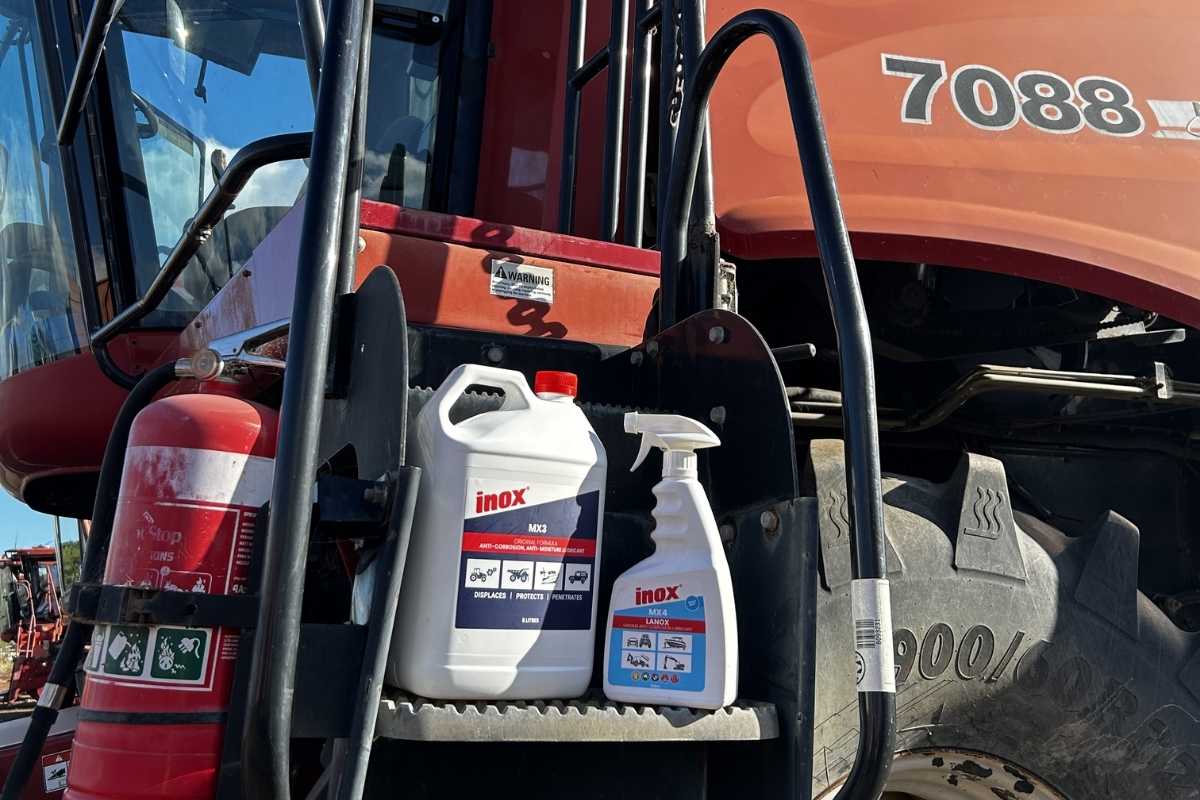
So make it a habit: check the oil before the season, halfway through, and any time you’ve had a solid hit off a rock or a stump. If the oil’s gone milky, water’s got in – drain it and replace it then and there, because milky oil is barely protecting anything. Once the box is sealed back up, keep moisture off the external fittings and machined faces with INOX MX3 Lubricant, which plays nicely with hydraulic systems too.
4. Hydraulics
Your header height, your reel, your unloading auger, often your drive – all of it runs on hydraulics. Lose the hydraulics and you’re not harvesting, full stop. The usual killer is low or dirty fluid taking out the pump, which is the dearest single part in the whole circuit. Run it low and the pump cavitates, cooks itself, and spits metal through the rest of the system for good measure.
Leaks are how the trouble gets in, and a small leak never stays small. A quick look at the fluid level and a run of the eye over the hoses and seals at the start and end of every day – that’s all it takes. INOX MX3 Lubricant keeps the fittings and connections corrosion-free, and LANOX MX4 Lanolin Lubricant looks after the linkages, cables and electrical bits around it.
5. Oil Seals – The One That Sets Off The Rest
Seals are about the cheapest part on the machine, and they’re the ones that’ll cost you the most. One lets go, the oil escapes, the part runs dry, heat builds, and the next thing you know a simple seal has damaged a very expensive bearing or gear. The worst offenders sit on the feeder house, cylinder drive, chopper gearbox and wheel hubs, where there’s the most heat, dirt and vibration.
A pre-season seal check is honestly one of the best half-hours you’ll spend – swapping a hard old seal takes minutes, finding it failed out in the paddock takes the afternoon. And after you’ve hosed the machine down, double-check the pressure washer hasn’t blasted grease out of the seals or pushed water in past them, because that catches people out all the time. Pack INOX MX8 Extreme Pressure Grease around the seal areas as a barrier, and give the external seals and housings a spray of LANOX MX4 Lanolin Lubricant for the longer term.
And Don’t Let It Rot Over Winter
More combines get wrecked sitting in the shed than most people would believe. Bare metal, dry chains, bearings left unprotected – they all quietly corrode through the off-season, so the machine’s already half-beaten before it turns a wheel next year.
So when you put it away: change the oils and filters while they’re still hot so the gunk comes out with them, grease every fitting, run INOX MX9 ‘No Chukka’ Chain Lube through the chains, and spray LANOX MX4 Lanolin Lubricant over the cutting blades, separator fingers, housings, cables and electrical fittings. A quick lube, fluid check and seal look before the first run next season is the difference between a clean start and a frantic call to the parts counter.
The Short Version
Good lubrication costs you cents an hour. A seized bearing, a cooked gearbox or a dead hydraulic pump costs you thousands – and that’s before you count the days lost while the weather closes in. Right product, right spot, right intervals. That’s the whole game.
Grab INOX and LANOX gear from your nearest rural retailer – and find your closest stockist with the store locator.