
July 14th, 2026
You probably keep your blades sharp and your dust collection running. Most woodworkers do. But ask the same people when they last put a drop of anything on their table saw trunnions or their mitre saw rails, and you’ll usually get a blank look.
That’s the gap – and it’s quietly costing you on every project. The cutting edges get all the attention while the parts that actually move the cut – the slides, screws, pivots and bearings – run dry, gum up with dust and slowly seize. You feel it every single day at the bench: the fence that won’t slide square, the tilt wheel you have to wrestle, the cut that drifts off your line, the burning, the rust spots. It all adds a little drag to the work, and most of it you’ve probably started treating as normal.
It isn’t. This is the cheapest, easiest fix in your workshop. A few minutes with the right INOX product and those daily annoyances just disappear – tools you’ve owned for years start feeling like new again. Here’s where the wins are hiding.
First, A Quick Mindset Reset
Two things quietly wreck tools: friction and corrosion. A dry, dirty slide makes a saw grab and stutter even when the blade is razor sharp, and that shows up as burning, tear-out and cuts that wander off your line. Worse, sawdust mixed with old oil turns into a fine grinding paste that chews through the very parts it’s sitting on.
So the rule is simple: clean first, then lubricate, and match the INOX product to the job.
For flat sliding surfaces – saw tables, fences, mitre slots – you want a dry film, not a wet one. INOX MX12 PTFE Supa Glide dries to a hard, visible, white film that sheds dust instead of collecting it, and it’s safe on bare timber and finished surfaces.
For moving joints, threads, pivots and cables, you want a wet lubricant that stays put. INOX MX3 Lubricant handles general duties whereas INOX MX5 Plus PTFE Lubricant is the pick where loads are higher.
For long-term rust protection – think tools that sit unused, or a garage that gets damp – a lanolin coating like LANOX MX4 Lanolin Lubricant leaves a thicker barrier that hangs around.
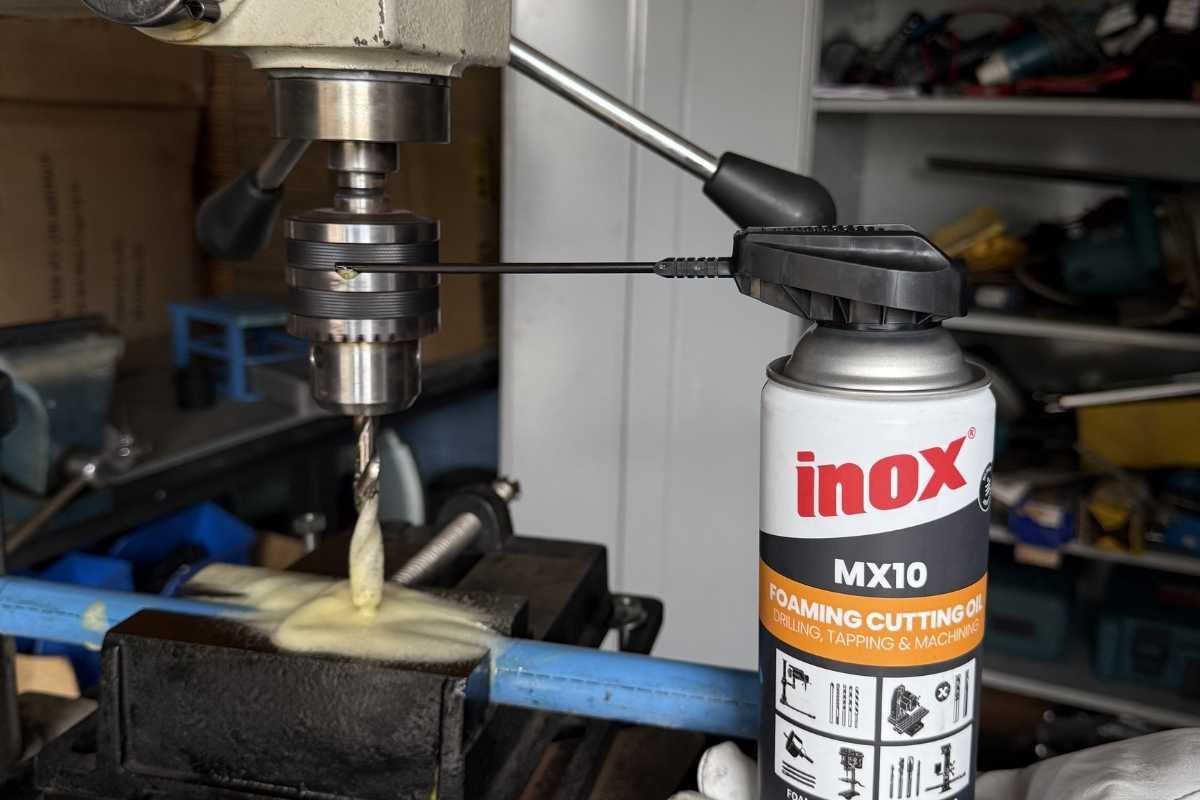
And for the times you’re drilling or tapping metal – jig hardware, brackets, a fence rail – keep a can of INOX MX10 Foaming Cutting Oil handy. The foam clings to the bit and cut so it doesn’t run off, keeping the heat down for cleaner cuts and holes, far longer bit life and bind-free tapping.
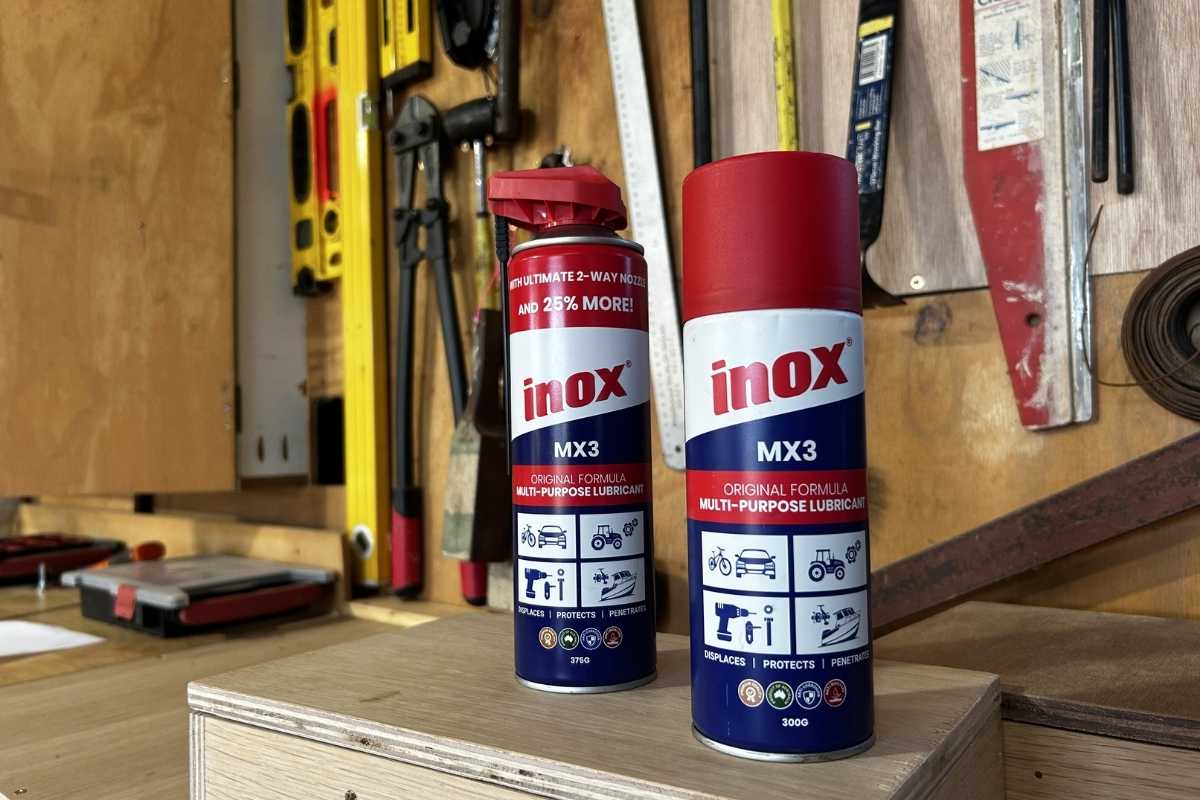
Table Saws: The Top & Everything Under It
Your table saw is the heart of the shop and the worst offender for neglect. The cast iron top rusts the moment humidity creeps in. The fence and rails stiffen up. And underneath, the height and tilt screws, trunnions and pivots quietly clog with packed sawdust until every adjustment is a fight.
Sort it in one session. Unplug the saw, pull the blade and throat insert, then vacuum and blow out the dust around the trunnions and tilt mechanism. Degrease anything gummy and let it dry. Then coat the table surface, mitre slots, fence faces and rails with INOX MX12 PTFE Supa Glide – it cuts the drag on your timber without leaving a greasy film that holds dust. Down below, work a little INOX MX5 Plus PTFE Lubricant into the height and tilt screws, trunnion pivots and locks, winding the controls through their full travel to spread it.
The difference is immediate: less push force, cleaner rips, a steadier feed rate and far less burning. Height and tilt changes stop binding, and that cast iron top stays rust-free through the damp months.
Mitre & Drop Saws: Rails, Pivots & Detents
A sliding mitre saw lives or dies by its rails. Plenty of people never touch them, or worse, hit them with something sticky that turns into a dust magnet. Either way the cut suffers.
Clean the rails properly to get the old grime and sawdust off, then run a thin film of INOX MX5 Plus PTFE Lubricant along them and wipe back the excess – you want a light coat, not wet drips. Use the same product on the bevel and mitre pivots, the detent plate and the locking clamps. For the fence and table where the workpiece slides, switch to INOX MX12 PTFE Supa Glide for a slick, dust-shedding surface. Keep all of it away from the blade.
You’ll get smoother pull-through, better control at the start of the cut, and – the big one – mitre angles that actually lock where you set them instead of creeping because the detents are fouled.
Drill Press: Smooth Movement, Plus A Trick For Metal
A drill press has two jobs to look after. First, the movement: clean the compacted dust out of the quill and rack, then lightly lubricate the rack and pinion with INOX MX3 Lubricant or INOX MX5 Plus PTFE Lubricant, keeping it clear of the belts. Hit the depth-stop threads, table crank and column clamp too, winding them through full travel. If you mostly drill timber, give the table a coat of INOX MX12 PTFE Supa Glide so it stays slick and rust-free.
Second, the thing almost everyone gets wrong: drilling metal dry. Sooner or later you’re boring holes in steel brackets, jig hardware or a fence, and running the bit dry burns the edge off it, bogs the motor down and leaves a rough hole. This is where INOX MX10 Foaming Cutting Oil earns its place. It’s a foaming cutting oil that clings right to the bit and the cut instead of running off, with extreme pressure additives that cut the heat, torque and chatter. You get cleaner holes and dramatically longer bit life, and because it’s chlorine and sulphur free it works across steel, stainless, aluminium and brass without staining.
Using it is easy: clamp the work, shake the can, spray the foam straight onto the bit and the drilling spot, then drill at a sensible speed and let the foam carry the chips clear. Reapply for deep or repeated holes, wipe off the residue at the end, and the thin film left behind helps stop fresh steel from flash rusting.
Hand Tools: Planes, Chisels, Clamps & Marking Gear
Your planes and chisels are precision instruments. Putting them away bare after sharpening, especially in a humid shed, is how they end up spotted with rust and feeling older than they are.
Wipe plane irons, chisels and saw plates with a light film of INOX MX3 Lubricant using a dedicated rag. For tools that sit for long stretches, or a genuinely damp space, step up to LANOX MX4 Lanolin Lubricant for a heavier barrier. Clamp screws, plane adjusters, marking gauge rods and folding-knife pivots all run sweeter with a drop of INOX MX3 Lubricant or INOX MX5 Plus PTFE Lubricant – just wipe away every bit of visible excess so none of it transfers onto your timber. Keep the lubricant on the metal, never on the faces that touch your work.
The Rest Of The Workshop
Same logic everywhere else. On bandsaws, lightly lubricate the tension and tracking screws with INOX MX3 Lubricant, and treat the cast iron table and mitre slots with INOX MX12 PTFE Supa Glide. On a thicknesser, that dry film on the bed and infeed and outfeed tables helps cut snipe and stops boards stuttering as they feed, while the height columns and handwheels just want a touch of INOX MX5 Plus PTFE Lubricant. Router tables, sliding jigs and mitre tracks all glide better with INOX MX12 PTFE Supa Glide. And clamps – clean off the glue squeeze-out, then a drop of INOX MX3 Lubricant on the screws and bars keeps them from binding when you need them most.
A 15-Minute Monthly Habit
You don’t need a big service. Once a month, do this: blow the dust off the table saw, mitre saw and drill press and wipe the bare metal down. Look for rust, sticky adjustments and clamps that have gone stiff. Clean the surfaces back properly – saw tops, fences, router tables – then refresh INOX MX12 PTFE Supa Glide over the bare, dry surfaces – saw tops, fences, router tables – and a touch of INOX MX3 Lubricant or INOX MX5 Plus PTFE Lubricant on the trunnions, rails, pivots and screws. Knock over any metal drilling or tapping you’ve been putting off, with INOX MX10 Foaming Cutting Oil on hand. Then store smart: tools off the concrete, away from damp corners, with a bit of air around them.
It’s less time than a coffee break, and the payoff is tools that feel better in your hands and last years longer.
Find INOX and LANOX products at your nearest retailer – and find your closest stockist with the store locator.