
September 22nd, 2026
Power boat rigging is everything that turns a bare hull into a working fishing or cruising platform: the tower and T-top, the outriggers, rod holders, shackles, blocks, steering gear and deck fittings. Solid power boat rigging maintenance keeps all of it moving and mounted, and salt and humidity give it a hard time every single day. Get on top of the two things that wreck rigging, corrosion and galling, and your gear lasts years longer.
The dissimilar metals trap
Most power boat rigging is a mix of metals. Stainless fasteners bolted into aluminium towers and gunwales, stainless hardware on alloy deck plates, fittings sitting against each other in constant salt spray. As most boaties learn the hard way, put two different metals together in saltwater and you get galvanic corrosion, the electrolysis that eats the alloy around a stainless bolt and locks the two solid.
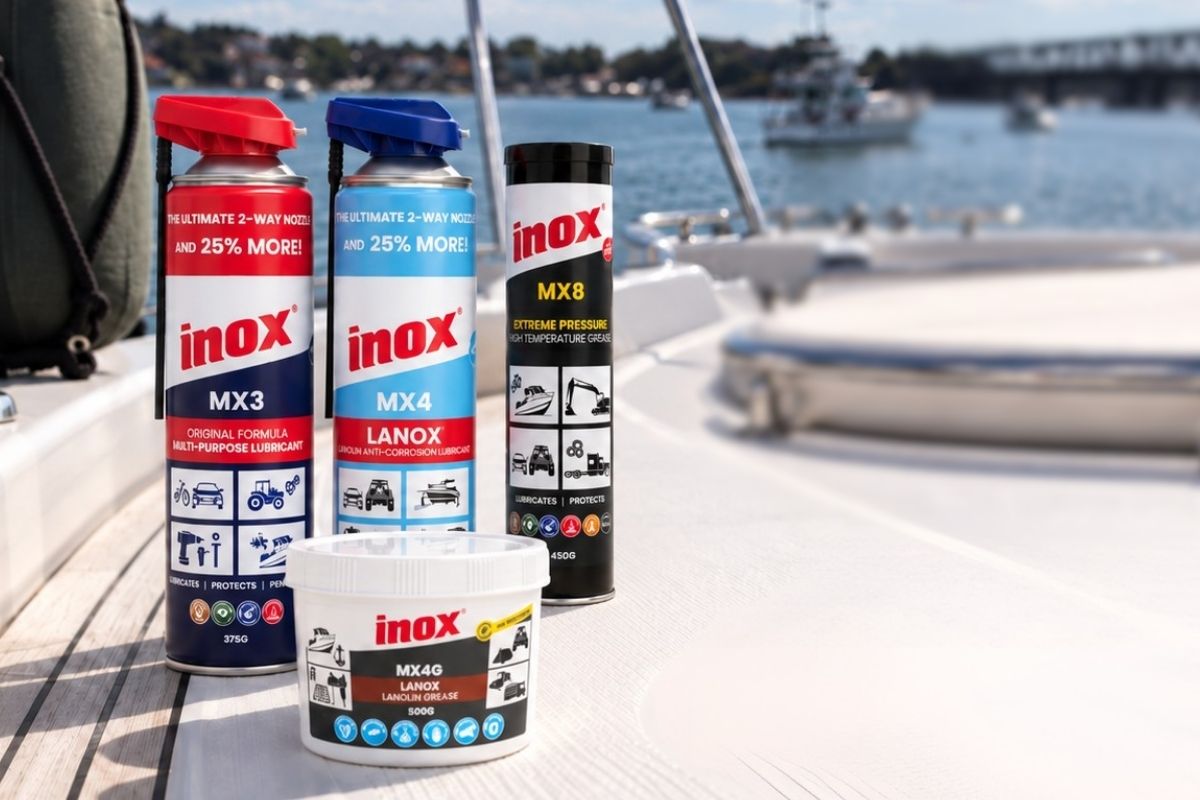
The fix is to break that path and keep salt water out. LANOX MX4 Lanolin Lubricant is built for it. The lanolin film clings, does not wash off and is non-conductive, and it actively stops electrolysis between dissimilar metals like stainless and aluminium. Spray it in between tower joints, fittings and fasteners after a wash down and it keeps working through months of exposure. On threads and bolted joints where you want a heavier, stay-put barrier, step up to LANOX MX4G grease.
Shackles, turnbuckles and load-bearing hardware
Shackles and turnbuckles carry real load on outrigger cables, tie-downs and rigging points, and they are almost always stainless. Turn a dry stainless thread under load and it galls, the high points shear and cold weld, and the pin will not move again without a grinder.
Never assemble a stainless pin or turnbuckle dry. A film of LANOX MX4G Lanolin Grease on the threads first is the whole game. MX4G is a powerful anti-seize that prevents galling, seizure and electrolysis on threaded fasteners, it is waterproof and it stays put under vibration. It is also safe on rubber and neoprene, so it will not harm nearby seals or grommets. When you adjust an outrigger cable, spin the turnbuckle end attached to the rigger rather than the crimped cable end so you do not unwind the swage.
Already got a shackle pin or clamp that will not shift? Flood it with INOX MX3 Lubricant. MX3 is a fast penetrant that frees rusted and salt corroded fittings, hinges and pins, and displaces the moisture behind the problem. Let it creep, then work the part gently instead of forcing it.
Blocks, pulleys and steering gear
Outrigger pulleys, steering sheaves and trim tab lead blocks all run on pins and bearings that salt and grit turn into grinding paste. A block that will not spin chafes lines and can fail a control run under load.
Rinse every block with fresh water after a trip, then keep the bearings and pins fed. For pins, sheave axles, steering pulleys, universal joints and any grease nipple point, INOX MX8 Extreme Pressure Grease is the pick. Its lithium complex base handles high and shock loads, and its high water washout resistance means it keeps lubricating gear that cops constant spray. MX8 is a metal to metal, heavy load grease, so use it on pins, bearings and Zerk fittings, and simply flush and run light on plastic ball bearing blocks the way most makers recommend. Not sure which grease suits which job? Our guide on which grease to use, MX4G vs MX6 vs MX8 sorts it by load, temperature and material.
Towers, T-tops and outriggers
Towers, T-tops and outrigger poles take the full brunt of sun and salt, and any scratch in the anodising or powder coat lets salt in behind it. After every wash down, mist the frame joints, fasteners, deck mounts and rod holder bases with LANOX MX4. It leaves a thin, non-staining barrier that keeps moisture off the metal and stops tea staining getting a start around welds and fittings.
Where stainless hardware bolts into an aluminium frame or deck, that is the spot to isolate the two metals with LANOX MX4G before you torque it down. It seals the joint, blocks salt and lets the fastener come apart cleanly at the next service instead of shearing off. One note: LANOX MX4 liquid may affect some natural rubber with long term use, so on anything bedded hard against rubber, use the MX4G grease instead.
A simple salt-season routine
Consistency beats the occasional big clean up. Scale this to how hard you run the boat.
- After every trip: rinse the whole rig with fresh water, extend hydraulic outriggers fully to flush them, then wipe salt film off the stainless.
- Monthly: spin every block and pulley, rinse any that feel rough, and check shackles and turnbuckles for stiffness or rust staining.
- Quarterly: re-grease pins, sheave axles and grease nipples, and re-coat tower and outrigger hardware with LANOX MX4.
- Annually: back off turnbuckles to inspect threads for galling, strip and re-grease steering blocks and winches, and replace anything pitted or cracked.
For more on protecting fixed marine gear year round, see our guides on maintaining your boat’s mooring and slip equipment and protecting your boat trailer and marine structures all year round.
Which INOX product for which job?
- Freeing seized pins, clamps and fittings: INOX MX3 Lubricant
- Corrosion barrier on towers, outriggers and deck hardware: LANOX MX4 Lanolin Lubricant
- Anti-seize on stainless threads and dissimilar metal joints: LANOX MX4G Lanolin Grease
- Bearings, sheave pins, steering gear and grease nipples: INOX MX8 Extreme Pressure Grease
Treat your rigging as one system, match the lubricant to the job and stick to a routine, and seized hardware stops ending your fishing days. To grab the range, find your nearest INOX stockist.