
September 22nd, 2026
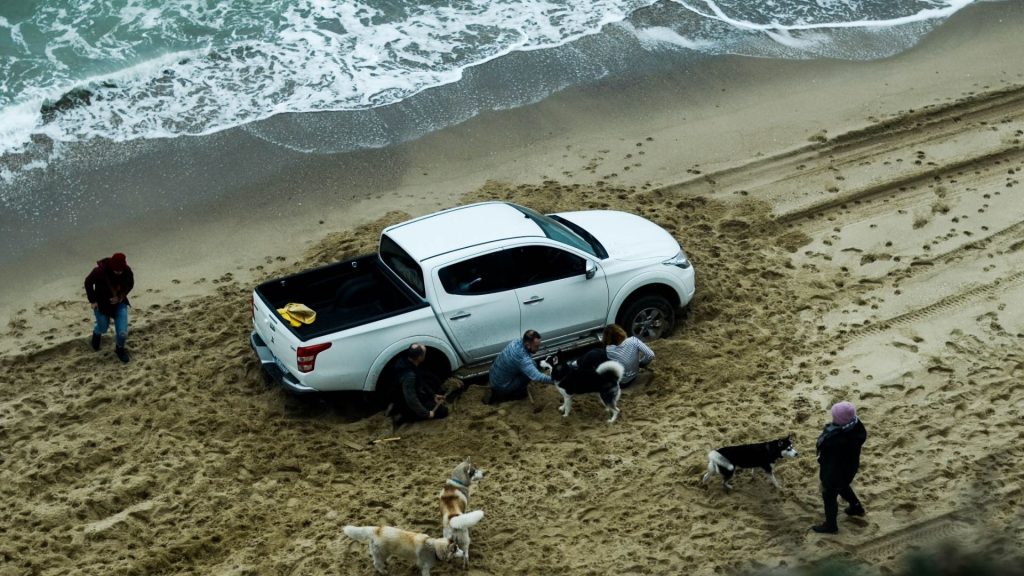
Getting bogged in sand, mud or soft clay isn’t a matter of ‘if’ for most Aussie 4WDers. It’s a matter of ‘when’. The gap between a 20-minute self-recovery and a long wait for a tow usually comes down to two things: the gear you carry and knowing how to use it.
Here’s a practical recovery kit built around five proven pieces of equipment, why each one earns its spot, and a few quick tips to get the most out of them. After the roundup there’s a short toolkit list for the smaller bits that save trips but rarely make the headlines. For a broader checklist, our guide to the must-have 4WD toolbox essentials is a good companion read.
1. A rated snatch recovery kit
A matched snatch kit like the Tuff Terrain 8K Snatch Recovery Hitch Kit gives you everything for a vehicle-to-vehicle recovery in one rated set: a kinetic strap, bow or soft shackles and a recovery hitch. An 8-tonne rating suits most dual-cab utes and mid-size 4WDs loaded for touring, with a safe margin above your vehicle’s weight. Buying it matched means the ratings and fittings already work together, instead of a mix of bargain-bin parts you’re hoping are up to the job.
Quick tips:
- Only ever connect to rated recovery points. Never loop a strap around a bumper, suspension arm or tow ball.
- Drape a recovery damper over the strap to kill the whip if something lets go.
- Build tension smoothly and feed in the throttle gently. Let the strap stretch do the work, not a violent yank.
- Seized recovery-point bolts or stiff shackles? Free them with INOX MX3 Lubricant before you load anything up.
2. Traction boards
When the tyres are spinning, recovery boards like the MAXTRAX MK-II give the wheel something solid to climb onto. They’re the benchmark for self-recovery because you often don’t need a second vehicle at all, which saves time and cuts risk. The MK-II boards handle heavy, loaded rigs and repeated use without cracking, and they work across sand, mud and snow.
Quick tips:
- Dig the sand or mud clear of each drive wheel first, then air down before you place them.
- Sit the boards squarely under the drive tyres, angled slightly up toward the tread.
- Use light, steady throttle. Spinning the wheels melts the lugs and digs you in deeper.
3. Tyre deflators
Airing down is the cheapest recovery trick there is, and often it stops you getting bogged in the first place. Sets like the Staun Tyre Deflators screw onto all four valves and drop every tyre to the same pressure at once, so you’re not crouched in the sand guessing with a gauge. A bigger contact patch lets the tyres float over soft ground instead of digging in.
Quick tips:
- Around 14 to 20 psi suits most soft sand. Go higher for mixed or rocky terrain.
- Do all four at once, then confirm with a gauge if you want certainty.
- Never hit the highway aired down. Reinflate first.
4. A 12V air compressor
Airing down only works if you can air back up, and a heavy-duty 12V compressor like the Ironman Air Champ (around 90 L/min) reinflates loaded 4WD tyres fast. Output and duty cycle are what matter here. A twin-cylinder unit handles multiple tyres, and multiple vehicles, without cooking itself on a group trip.
Quick tips:
- Pair it with your deflators. Air down at the beach, air up before you leave.
- Mount it securely with proper fusing and wiring, not dangling off the battery.
- Confirm final pressures with a gauge before any loaded highway run.
- If a creek crossing has left connectors wet, a shot of INOX MX3 displaces the moisture and gets things working again.
5. A tree trunk protector
When you’re solo and there’s no second vehicle, a tree trunk protector like the XTM Tree Trunk Protector turns a solid tree into a safe winch anchor. The wide woven strap spreads the load, which protects the tree and reduces the chance of the strap failing. It doubles as an extension strap or part of a double-line winch setup too.
Quick tips:
- Pick a healthy, solid tree at least 150 to 200 mm thick, and check for rot.
- Wrap the protector flat and untwisted, then join your winch line with a rated shackle.
- Keep everyone well clear of the line and winch in slow, controlled pulls.
The small toolkit list: the bits that quietly save trips
The gear above gets you unstuck. This lot keeps you moving once the drama’s over. None of it is glamorous, but leaving it at home is how a good day turns into a long one.
- Long-handled shovel. For digging out wheels and shaping ramps for your boards. Non-negotiable.
- Spare rated shackles. A couple of extra soft or bow shackles add flexibility and a safety margin.
- Recovery damper. A weighted blanket over any loaded strap. Cheap insurance.
- Spare filters. After a dusty recovery a clogged air filter robs power and can cook an engine far from help. Carry a spare engine air filter to suit your rig, a cabin filter, and a fuel filter element for remote trips.
- Basic tools. Spanners and sockets to fit your recovery-point bolts and bash plates, plus screwdrivers, gloves and rags.
- Electrical basics. Assorted blade fuses, a few metres of wire, tape and a test light or multimeter for flat batteries and blown fuses.
- Fixings. Heavy-duty cable ties, gaffer or self-amalgamating tape, and a hose repair kit.
- The INOX field-maintenance essentials. This is where recovery gear and maintenance meet. INOX MX3 Lubricant frees seized bolts and shackles, displaces water from drowned connectors after a crossing, and lightly lubes hinges and latches. LANOX MX4 Lanolin Lubricant lays down a tenacious, salt-resistant film that protects recovery hardware, chassis fittings and battery terminals long after the trip, which makes it ideal for coastal and wet work. For load points, reach for a grease: LANOX MX4G Lanolin Grease as a stay-put anti-seize on shackle pins and threads, or INOX MX8 Extreme Pressure Grease for wheel and winch bearings that see real load and heat.
Not sure which to grab for a given job? Our explainers on the difference between INOX MX3 and LANOX MX4 and which grease to use: MX4G vs MX6 vs MX8 break it down. Heading somewhere salty? Protecting your 4WD from saltwater damage with LANOX MX4 is worth a look.
Before you go
A recovery kit isn’t about carrying the most gear. It’s about carrying the right gear and knowing how it works before you need it. Practise your board placement and air-down routine somewhere safe so it’s second nature when you’re actually bogged. And once you’re home, don’t let salt and grit sit on everything. Our 10 tips for washing your 4×4 after an offroad trip will keep the rig, and your recovery gear, in good nick.
INOX doesn’t sell online, so track down MX3, LANOX MX4 and the rest through your nearest stockist on the store locator.